Construction Materials: Complete Guide for Modern Building Projects
Construction materials are the foundation of every successful building project. From residential houses and commercial buildings to warehouses, factories and infrastructure projects, the materials selected during construction influence durability, appearance, efficiency, maintenance and overall project performance.
Modern construction uses a wide range of materials, including cement, concrete, aggregates, bricks, blocks, steel, mortar, plaster, tile adhesives, waterproofing materials, floor hardeners and various specialized construction products.
Choosing the right construction materials is not simply about selecting the lowest-cost product. The material needs to match the application, surface, environmental conditions, design requirements and expected performance of the project.
In India, construction materials are also connected with relevant standards and specifications. The Bureau of Indian Standards (BIS) identifies numerous categories of building materials and provides standards covering materials, testing, storage and related requirements.
This guide explains the major construction materials, their applications, selection factors and the role of modern construction products in improving building quality.
What Are Construction Materials?
Construction materials are products and substances used to build, finish, protect or improve buildings and other structures.
They can range from basic materials such as cement, aggregates, bricks and steel to specialized products such as tile adhesives, ready mix plaster, block jointing mortar, waterproofing materials and floor hardeners.
The exact materials required depend on the type of construction project.
For example:
- A residential building may require bricks or blocks, cement, mortar, plaster, tile adhesive and waterproofing products.
- A warehouse may require concrete, reinforcement steel, floor hardener and specialized flooring systems.
- A commercial building may require masonry materials, plaster, tile adhesives, flooring materials and finishing products.
- An industrial facility may require high-performance flooring, construction mortars, protective systems and specialized materials.
The objective is not simply to use more materials. It is to select appropriate construction materials for each application.
Why Are Construction Materials Important?
Construction materials directly affect how a building performs during its service life.
The right materials can help provide:
1. Structural performance
Materials such as concrete, reinforcement steel, masonry units and structural systems contribute to the strength and stability of a building.
2. Surface quality
Plasters, mortars, tile adhesives and finishing materials influence the appearance and quality of walls and floors.
3. Durability
Appropriate materials can help a building withstand expected environmental and service conditions.
4. Construction efficiency
Ready-to-use or factory-produced construction materials can improve consistency and simplify certain site operations when correctly specified and applied.
5. Maintenance requirements
Material selection can influence future repair, maintenance and replacement requirements.
6. Project cost
The cost of construction materials is only one part of the overall project cost. Labour, wastage, application time, surface preparation, transportation and maintenance should also be considered.
Major Types of Construction Materials
Construction materials can be divided into several broad categories.
1. Cement
Cement is one of the most widely used construction materials. It acts as a binding material in products such as concrete and cement mortar.
When cement is combined with water, it undergoes hydration and develops binding properties.
Cement is commonly used in:
- Concrete
- Mortar
- Plastering
- Masonry work
- Flooring
- Construction products
Different cement types and specifications are available for different applications. Selection should be based on project requirements and applicable specifications rather than simply choosing a product based on price.
2. Concrete
Concrete is a composite construction material generally made using cementitious material, aggregates and water, with other constituents or admixtures used where required.
Concrete is widely used for:
- Foundations
- Columns
- Beams
- Slabs
- Pavements
- Industrial floors
- Structural and non-structural applications
The performance of concrete depends on factors such as mix design, constituent materials, water control, placement, compaction, curing and environmental conditions.
Good-quality constituent materials alone cannot compensate for poor construction practices.
3. Aggregates
Aggregates are important components of concrete and other construction applications.
They may include fine aggregates and coarse aggregates.
Aggregates can influence:
- Workability
- Strength
- Density
- Durability
- Volume stability
- Concrete performance
The suitability of aggregates should be evaluated according to the intended application and relevant specifications.
4. Bricks and Blocks
Bricks and blocks are commonly used for masonry construction.
Modern projects may use different masonry units, including:
- Clay bricks
- Concrete blocks
- Hollow blocks
- Solid blocks
- Lightweight blocks
- AAC blocks
The selection depends on structural requirements, wall design, availability, construction method and project specifications.
Masonry units also need appropriate mortar or jointing materials to create effective connections between units.
5. Block Jointing Mortar
Block jointing mortar is a specialized material used to create joints between suitable masonry blocks.
It is particularly associated with applications involving manufactured blocks where controlled jointing is required.
Compared with conventional masonry approaches, a specialized jointing product may offer advantages related to application consistency and material handling when used according to the manufacturer’s instructions.
Important considerations include:
- Block type
- Surface condition
- Product compatibility
- Mixing method
- Application thickness
- Working time
- Weather conditions
- Curing requirements
The product should always be applied according to its technical documentation.
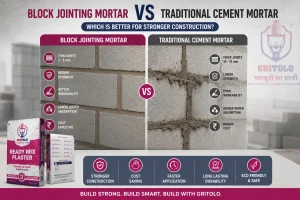
For more information, readers can also explore Gritolo’s article on Block Jointing Mortar vs Traditional Brickwork Mortar.
6. Ready Mix Plaster
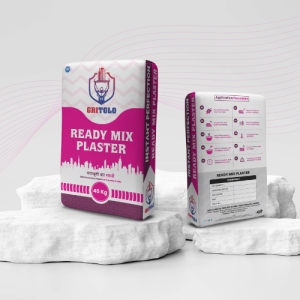
Ready mix plaster is a factory-prepared plastering material designed to provide a more controlled approach to wall finishing.
Traditional plastering may require individual measurement and mixing of materials at the construction site. Factory-produced plaster products are designed to simplify material handling and improve batch consistency.
Ready mix plaster can be used for appropriate:
- Interior walls
- Exterior walls
- Masonry surfaces
- Concrete surfaces
- Residential projects
- Commercial projects
- Industrial projects
Before application, the substrate should be evaluated and prepared appropriately.
Important factors include:
- Surface cleanliness
- Surface condition
- Water absorption
- Mixing procedure
- Application thickness
- Finishing method
- Curing or drying requirements
Ready mix plaster should not be treated as a universal solution for every surface. Product specifications and project conditions should determine suitability.
7. Tile Adhesive
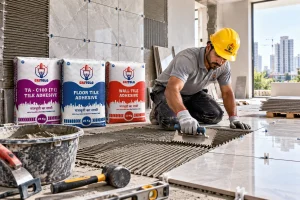
Tile adhesive is a construction material designed to bond tiles to suitable substrates.
It is available in different grades and formulations for different applications.
Tile adhesive selection can depend on:
- Tile type
- Tile size
- Substrate
- Wall or floor application
- Interior or exterior environment
- Moisture exposure
- Expected service conditions
- Installation requirements
For example, the requirements for installing ceramic wall tiles may differ from those for large-format tiles or demanding flooring applications.
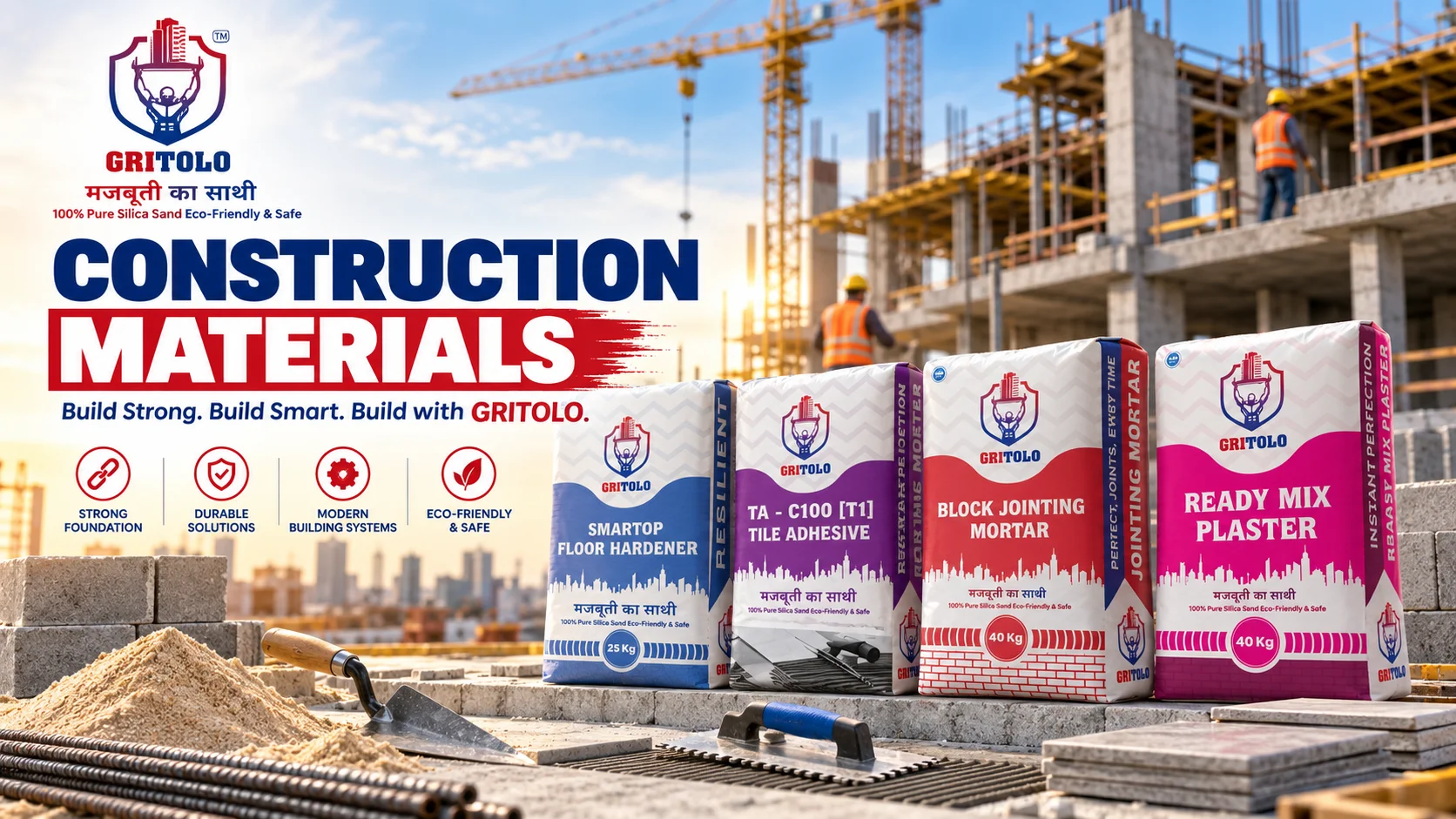
Gritolo offers different tile adhesive products, including:
- TA-C100 [T1] Tile Adhesive
- TA-V200 [T2] Tile Adhesive
- TA-M300 [T3] Tile Adhesive
- TA-G400 [T4] Tile Adhesive
The appropriate product should be selected based on the application’s technical requirements.
8. Floor Hardener
Floor hardener is used to improve the surface performance of suitable concrete flooring systems.
It is particularly relevant for areas exposed to regular traffic, abrasion or demanding service conditions.
Potential applications include:
- Warehouses
- Factories
- Workshops
- Industrial facilities
- Commercial areas
- Loading and working zones
Floor hardener selection and application depend on the flooring system, concrete condition, expected traffic and required finish.
Application timing is also important. Applying a floor hardener at an inappropriate stage can affect the final result.
Proper surface preparation and installation procedures are therefore essential.
Gritolo’s Smartop Floor Hardener can be positioned within this product category for customers looking for floor finishing solutions.
9. Waterproofing Materials
Water is one of the major factors that can contribute to deterioration of building components when moisture protection is inadequate.
Waterproofing and damp-proofing materials can be used in appropriate building locations depending on the project design.
Applications can include:
- Exterior walls
- Roofs
- Basements
- Wet areas
- Bathrooms
- Foundations
- Balconies
- Terraces
Waterproofing should not be considered only as a surface coating. A successful moisture-control strategy can involve substrate preparation, detailing, drainage, joints, compatible materials and correct application.
For exterior wall applications, plaster and waterproofing requirements should be evaluated together with the wall substrate and exposure conditions.
10. Mortar
Mortar is commonly used in masonry, plastering and other construction applications.
Traditional cement mortar generally consists of cementitious material, sand and water, with proportions varying according to the intended application.
Mortar can be used for:
- Brick masonry
- Block masonry
- Plastering
- Repair work
- Bedding applications
Modern construction also includes specialized dry-mix mortars developed for particular purposes.
The selection between conventional and specialized mortar should depend on technical requirements, site conditions and the manufacturer’s recommendations.
11. Steel and Reinforcement Materials
Steel is widely used in reinforced concrete construction.
Reinforcement helps concrete structures resist tensile stresses and contributes to structural performance when correctly designed and installed.
Steel construction materials can include:
- Reinforcement bars
- Structural steel sections
- Wire products
- Fasteners
- Steel components
The grade, dimensions, detailing and installation requirements should be determined by the structural design and applicable standards.
12. Glass
Glass is used in modern construction for:
- Windows
- Doors
- Facades
- Partitions
- Balustrades
- Interior applications
Different glass products provide different combinations of transparency, thermal performance, safety and appearance.
Selection should consider the location and functional requirements of the building.
13. Timber and Engineered Wood
Timber and wood-based products remain relevant in construction and interior applications.
They can be used for:
- Doors
- Windows
- Furniture
- Interior finishes
- Structural applications where designed appropriately
Material selection should consider moisture, biological deterioration, dimensional stability, fire requirements and intended use.
How to Choose the Right Construction Materials
Selecting construction materials requires more than comparing product prices.
Use the following process.
Step 1: Understand the application
First identify what the material needs to do.
Is it intended for:
- Structural construction?
- Masonry?
- Plastering?
- Flooring?
- Tile installation?
- Waterproofing?
- Surface finishing?
The application determines the basic performance requirements.
Step 2: Check substrate compatibility
The material must be compatible with the surface on which it will be installed.
For example, tile adhesive selection can depend on the substrate and tile type, while plaster selection depends on the wall surface and intended finish.
Step 3: Consider environmental conditions
Think about exposure to:
- Water
- Humidity
- Heat
- Cold
- Sunlight
- Chemicals
- Heavy traffic
- Abrasion
A product suitable for a dry interior environment may not be appropriate for an exposed exterior or industrial environment.
Step 4: Review technical specifications
Before purchasing construction materials, review the technical documentation.
Important information can include:
- Coverage
- Mixing requirements
- Application method
- Working time
- Setting time
- Strength characteristics
- Storage requirements
- Recommended substrate
- Limitations
Technical specifications are more useful than marketing claims when making a product decision.
Step 5: Check applicable standards
Standards are an important part of construction-material selection.
For projects in India, relevant Indian Standards should be considered where applicable.
The Bureau of Indian Standards identifies numerous construction-material categories under the National Building Code framework, including cement and concrete, bricks and blocks, mortar, building chemicals, waterproofing materials, steel, glass, timber and other materials.
Project teams should verify the latest applicable standards and project specifications before procurement.
Step 6: Consider total project cost
The cheapest material is not necessarily the lowest-cost solution.
Consider:
Total cost = Material + Labour + Wastage + Application + Maintenance
For example, a material with a higher purchase price could potentially be economical if it reduces wastage or installation complexity. However, such conclusions should be based on actual project conditions rather than assumptions.
Construction Materials for Different Types of Projects
Residential Construction
Residential projects commonly require:
- Cement
- Concrete
- Bricks or blocks
- Mortar
- Ready mix plaster
- Tile adhesive
- Waterproofing materials
- Flooring products
- Paints
- Plumbing materials
- Electrical materials
Material selection should consider occupant requirements, local climate, building design and expected maintenance.
Commercial Construction
Commercial projects may require a broader range of materials because of higher traffic and operational requirements.
Common applications include:
- Flooring
- Wall finishing
- Tile installation
- Concrete
- Masonry
- Waterproofing
- Fire-related construction systems
- Mechanical and electrical installations
Material selection should be coordinated with the building’s intended use.
Industrial Construction
Industrial facilities can have more demanding requirements.
Construction materials may need to withstand:
- Heavy traffic
- Mechanical abrasion
- Industrial operations
- Moisture
- Chemicals
- Equipment loads
- Frequent cleaning
Flooring systems and surface materials therefore need careful specification.
Traditional vs Modern Construction Materials
Construction has increasingly incorporated factory-produced and application-specific materials alongside traditional products.
| Factor | Traditional Materials | Modern Specialized Materials |
|---|---|---|
| Preparation | Often site-based | Often factory-controlled |
| Consistency | Can depend on site mixing | Typically designed for controlled formulation |
| Application | General-purpose | Application-specific |
| Storage | Varies | Product-specific |
| Technical guidance | General | Often detailed technical documentation |
| Selection | Based on traditional practice | Based on application and specifications |
Neither category is automatically appropriate for every project.
The correct choice depends on the application, design, specifications, workmanship and environmental conditions.
Benefits of Using Application-Specific Construction Materials
Modern construction products are increasingly designed around particular applications.
Examples include:
- Tile adhesive for tile installation
- Block jointing mortar for masonry joints
- Ready mix plaster for wall finishing
- Floor hardener for concrete floor surfaces
- Waterproofing materials for moisture-control applications
The key benefit is that the material is developed around a defined construction requirement.
However, application-specific materials still require correct substrate preparation and installation.
Common Mistakes When Selecting Construction Materials
1. Choosing only based on price
A low purchase price does not necessarily mean a lower overall project cost.
2. Ignoring technical specifications
Product data should be reviewed before installation.
3. Selecting the wrong product category
For example, a material designed for one application should not automatically be substituted into another.
4. Ignoring surface preparation
Even a suitable product can perform poorly when applied to an unsuitable or improperly prepared substrate.
5. Incorrect mixing
Water quantity and mixing procedures can affect material performance.
6. Poor storage
Construction materials can be affected by moisture, temperature and unsuitable storage conditions.
7. Ignoring environmental conditions
Heat, rain, humidity and exposure can influence application and performance.
8. Skipping quality checks
Materials should be checked when received and before use.
How Gritolo Supports Modern Construction
GRITOLO GLOBAL INDIA PRIVATE LIMITED focuses on construction materials designed for modern building requirements.
Its product range includes solutions associated with:
- Tile adhesives
- Ready mix plaster
- Block jointing mortar
- Floor hardeners
- Construction materials
- Wall and floor finishing applications
Gritolo’s approach focuses on providing construction solutions for residential, commercial and industrial projects.
The company’s product portfolio includes different tile adhesive grades such as TA-C100 [T1], TA-V200 [T2], TA-M300 [T3] and TA-G400 [T4], along with products such as Smartop Floor Hardener.
For project-specific requirements, customers should review the relevant product documentation and application recommendations before selecting a material.
Construction Materials and Sustainability
Sustainability is becoming an increasingly important consideration in building design and construction.
The sustainability of a construction material can involve more than simply whether it is labelled “green.”
Consider:
- Material efficiency
- Product durability
- Waste generation
- Local availability
- Transportation
- Recyclability
- Maintenance requirements
- Service life
- Manufacturing considerations
A durable material that performs effectively for its intended application can potentially reduce replacement requirements, but sustainability claims should be supported by appropriate project data.
The National Building Code framework in India also includes an approach to sustainability and provisions relating to sustainable materials and construction practices.
Quality Control for Construction Materials
Quality control should begin before the material reaches the construction site.
A practical quality-control process can include:
Before purchase
Check:
- Manufacturer information
- Technical specifications
- Applicable standards
- Product suitability
- Required quantity
During delivery
Check:
- Packaging condition
- Batch information
- Product identification
- Visible damage
- Storage requirements
During application
Check:
- Surface preparation
- Mixing procedure
- Application method
- Thickness
- Working conditions
- Product coverage
After application
Check:
- Surface finish
- Bonding where relevant
- Cracking
- Uniformity
- Defects
- Required curing or drying
For critical structural applications, qualified engineers and project professionals should determine the appropriate testing and acceptance procedures.
Frequently Asked Questions About Construction Materials
What are construction materials?
Construction materials are products used to build, finish, protect or improve buildings and other structures. Common examples include cement, concrete, aggregates, bricks, blocks, steel, mortar, plaster, tile adhesives, waterproofing materials and floor hardeners.
What are the most common construction materials?
Common construction materials include cement, concrete, aggregates, bricks, blocks, steel, mortar, plaster, glass, timber and specialized products such as tile adhesives and waterproofing materials.
How do I choose construction materials?
Choose construction materials according to the application, substrate, environmental exposure, required performance, applicable standards, technical specifications, installation requirements and total project cost.
What are modern construction materials?
Modern construction materials include both conventional materials manufactured using controlled processes and specialized products designed for specific applications. Examples include ready mix plaster, tile adhesives, block jointing mortar, floor hardeners and specialized waterproofing products.
Why is material quality important in construction?
Material quality can influence durability, safety, appearance and performance. Appropriate materials should meet the requirements of the project and relevant specifications.
What is ready mix plaster used for?
Ready mix plaster is used for suitable wall and surface finishing applications. The exact application depends on the product specification, substrate and project requirements.
What is tile adhesive used for?
Tile adhesive is used to bond suitable tiles to compatible substrates. Product selection depends on factors such as tile type, substrate, application and environmental exposure.
What is block jointing mortar?
Block jointing mortar is a specialized mortar used for joining suitable masonry blocks. Application should follow the product’s technical instructions and the requirements of the masonry system.
What is floor hardener used for?
Floor hardener is used as part of suitable concrete flooring systems to improve the surface characteristics required for areas exposed to traffic and abrasion.
Are construction materials covered by Indian Standards?
Many construction materials and related processes are covered by Indian Standards. The applicable standard depends on the material and application. Project teams should verify the latest applicable requirements before procurement and construction.
How can construction material wastage be reduced?
Wastage can be reduced through accurate quantity estimation, appropriate storage, careful handling, proper mixing, trained application and good site management.
Is the cheapest construction material always the best choice?
No. Material selection should consider suitability, technical performance, installation requirements, wastage, durability, maintenance and total project cost rather than purchase price alone.
Conclusion
Construction materials are fundamental to the quality, performance and longevity of modern buildings. From basic materials such as cement, concrete, aggregates, bricks, blocks and steel to specialized products such as ready mix plaster, tile adhesives, block jointing mortar, floor hardeners and waterproofing materials, every product has a specific role.
The right material depends on the application.
Before selecting a construction material, consider the substrate, environmental conditions, required performance, technical specifications, applicable standards, installation procedure and total project cost.
For residential, commercial and industrial projects, a systematic approach to material selection can help improve construction planning and reduce avoidable problems.
Gritolo Global India Private Limited provides construction-material solutions for modern building requirements, including tile adhesives, ready mix plaster, block jointing mortar and floor finishing solutions.
If you are planning a construction project and need information about suitable construction materials, explore the Gritolo product range or contact the Gritolo team for product-specific information.