Ready Mix Block Jointing Mortar: The Ultimate Guide to Modern Masonry
The construction industry in India is undergoing a massive transformation. We are moving away from the heavy, red clay bricks of the past and embracing the lightweight, energy-efficient efficiency of AAC (Autoclaved Aerated Concrete) Blocks.
Using traditional sand-cement mortar on high-tech AAC blocks is like putting low-grade fuel in a Ferrari. It leads to cracks, poor bonding, thermal leakage, and massive water wastage.
The solution? Ready Mix Block Jointing Mortar.
If you are a builder, contractor, or homeowner, you have likely heard this term. But is it just a trend, or is it a necessity? Does it really save money?
At Gritolo Global India Pvt Ltd, we believe in building with resilience and innovation. In this comprehensive guide, we will dismantle the myths, crunch the numbers, and explain why ready mix block jointing mortar is the most important material upgrade you will make this year.
1. What is Ready Mix Block Jointing Mortar?
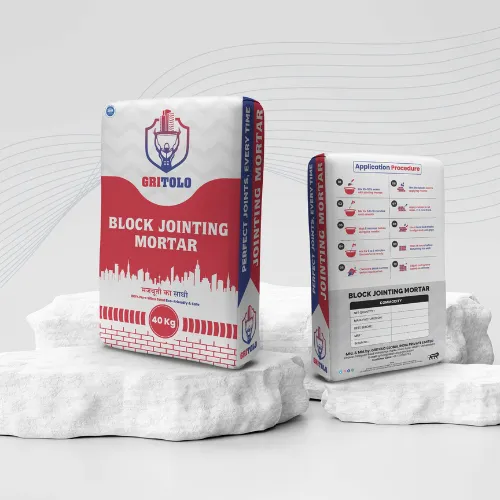
Ready Mix Block Jointing Mortar is a factory-engineered, polymer-modified cementitious adhesive designed specifically for bonding masonry units like AAC blocks, fly ash bricks, and concrete blocks.
Unlike traditional mortar (which is mixed on-site using river sand and cement), this product comes as a pre-mixed powder in bags. You simply add water to create a high-strength, thixotropic paste.
It is designed for “Thin Bed Technology“, meaning it bonds blocks with a layer as thin as 2mm to 3mm, compared to the 10mm to 15mm required for traditional mortar.
2. The Crisis: Why Traditional Sand-Cement is Failing
To understand the solution, we must look at the problem. For decades, we used a mix of Cement (1 part) and River Sand (6 parts) to join bricks. Why doesn’t this work anymore?
A. The River Sand Shortage
River sand mining is banned or heavily restricted in many Indian states to protect the environment. The sand available on the black market or from unreliable sources often contains silt, clay, and organic matter. This “dirty sand” weakens the wall and causes the plaster to degrade.
B. The “Suction” Problem of AAC Blocks
AAC blocks are porous. If you apply a thick layer of traditional cement mortar, the dry AAC block sucks the water out of the mortar immediately. This leaves the cement “thirsty”—it doesn’t have enough water to cure properly. The result? The mortar turns to dust, and the bond breaks.
C. Thermal Bridging
AAC blocks are insulators; they keep heat out. Cement mortar is a conductor; it lets heat in. If you have thick 15mm mortar joints all over your wall, heat travels through the mortar, bypassing the block’s insulation. This makes your AC work harder.
Ready mix block jointing mortar solves all three problems instantly.
3. Top 8 Benefits of Using Ready Mix Block Jointing Mortar
Why should you switch? It comes down to cost, speed, and quality.
1. Thin Bed Technology (Material Savings)
Traditional mortar requires a 12mm-15mm thick layer to level out uneven bricks. Because AAC blocks are machine-cut and perfectly flat, Gritolo’s mortar is applied at just 3mm thickness.
- Result: You use 75% less material by volume. One truckload of adhesive replaces four truckloads of sand and cement.
2. Self-Curing (Water Savings)
This is a game-changer. Traditional walls need to be watered (cured) for 7 to 10 days. That is thousands of liters of water wasted.
Gritolo’s ready mix block jointing mortar contains special polymers that retain moisture. It is self-curing.
- Result: No water needed for curing. No labor wasted holding a hose pipe.
3. High Tensile Adhesion Strength
Traditional mortar relies on “mechanical grip” (friction). Gritolo mortar relies on “chemical bonding.” The polymers create a bond that is often stronger than the block itself. It makes the wall act as a single, monolithic unit.
4. Speed of Construction
Time is money.
- No sieving sand (saves hours).
- No mixing raw materials (saves hours).
- Faster application using a notched trowel.
- No waiting for curing.
- Result: Project completion time is reduced by 30%.
5. Thermal Insulation
By reducing the joint thickness to 3mm, you eliminate “thermal bridges.” The thin joint ensures the wall maintains the superior insulation properties of the AAC blocks.
6. Zero Wastage
On a traditional site, 20-30% of the sand/cement mix falls on the floor (rebound loss) or is lost during mixing. Gritolo mortar is sticky. It stays on the block. Wastage is negligible.
7. Cleaner Sites
No heaps of sand blocking the driveway. No dust blowing in the wind. Just neat stacks of bags. This is vital for sites with limited storage space in cities like Pune or Mumbai.
8. Eco-Friendly (Green Building)
By saving water, eliminating river sand usage, and improving energy efficiency, using Gritolo mortar contributes to LEED and IGBC Green Building ratings.
4. Cost Analysis: Is It Really Cheaper?
This is the most common question we get asked on search engines and at construction sites.
Q: Ready Mix Mortar bags cost more than cement. How is it cheaper?
A: You must look at the “Applied Cost,” not the “Bag Cost.”
Let’s break down the hidden costs of traditional mortar:
- Sand Cost: High and rising.
- Labor Cost: Sieving sand, mixing, curing (7 days).
- Transport: Moving tons of sand to upper floors.
- Thickness: You are using 15mm of material vs 3mm.
The Math:
When you factor in the elimination of sand, the reduction in labor (no curing/sieving), and the speed of the project, Ready Mix Block Jointing Mortar is typically 10-15% cheaper per square foot of wall than traditional site-mix mortar.
And that doesn’t even count the long-term savings on electricity bills due to better insulation!
5. Gritolo’s Innovation: Why Our Mortar is Different
At Gritolo Global India Pvt Ltd, we don’t just bag cement and sand. We engineer solutions.
Our Ready Mix Block Jointing Mortar is formulated with:
- High-Grade Cement: For structural integrity.
- Graded Sand: Washed, dried, and sieved to micron-level precision to ensure a smooth 3mm paste.
- Cellulose Ethers: To retain water so the porous AAC blocks don’t suck the mortar dry.
- Redispersible Polymer Powders: To provide flexibility and extreme bonding strength.
We test every batch to ensure it meets and exceeds ASTM C1660 and relevant IS Standards.
6. How to Apply: The Step-by-Step Guide
Using ready mix block jointing mortar requires a change in technique. You cannot use a mason’s standard trowel. You must use a Notched Trowel.
Step_1: Surface Preparation
Ensure the AAC blocks are clean. Remove dust using a brush. Dust is the enemy of adhesion. Wet the blocks slightly (surface moist only, no dripping water).
Step_2: Mixing
Take a clean bucket. Add water (approx. 25-30% by weight). Gradually add the Gritolo powder while mixing with an electric stirrer.
- Tip: Mix for 5 minutes until it looks like creamy toothpaste. Let it sit for 2 minutes. Mix again.
Step_3: Application
Use a 3mm or 4mm Notched Trowel. Scoop the mortar and drag it across the block. The notches will create uniform “ribs” of mortar.
- Why Notches? This ensures exactly 3mm thickness and 100% coverage without wastage.
Step_4: Placing the Block
Place the next block on top. Gently tap it with a rubber mallet. The ribs will collapse, spreading the adhesive perfectly to the edges.
Step_5: Cleaning
Remove any excess mortar that squeezes out immediately.
Step_6: Finish
The wall is ready for plastering in just 24 hours. No curing needed!
7. Common Mistakes to Avoid
Even with the best product, errors can happen. Avoid these to ensure a strong wall.
1. Adding Cement or Sand:
Never add extra cement or sand to the Gritolo bag. The chemistry is pre-balanced. Adding stuff ruins the polymer ratio and weakens the bond.
2. Using Thick Layers:
This mortar is designed for Thin Bed (2-4mm) application. If you apply it 15mm thick to fill a gap, it may shrink or crack. If your floor is uneven, level the first layer with concrete, then start block work.
3. Using a Flat Trowel:
Using a flat trowel results in uneven thickness and wastage. Always use a notched trowel.
4. Ignoring Dust:
If you apply adhesive on a dusty block, the glue sticks to the dust, not the block. Always brush the blocks.
8. Can It Be Used for Other Bricks?
While specifically famous for AAC blocks, ready mix block jointing mortar is versatile.
- Fly Ash Bricks: Yes. Because they are machine-molded and uniform, it works perfectly.
- Concrete Blocks: Yes. Excellent bond strength.
- Red Clay Bricks: Generally No. Why? Because red bricks are uneven and vary in size. You need a thick 15mm layer to level them out. Thin bed mortar cannot fill those large gaps. Stick to traditional mortar for red bricks, or switch to AAC blocks!
9. Technical Specifications
If you are an architect or structural engineer, here is what you need to know about Gritolo’s mix:
- Appearance: Grey Powder
- Pot Life: Approx. 2 hours (at 30°C)
- Open Time: 10-15 Minutes
- Tensile Adhesion Strength: > 0.5 N/mm² (ASTM C1660)
- Compressive Strength: > 10 N/mm²
- Curing: Self-Curing
- Shelf Life: 6 Months in dry storage
10. Frequently Asked Questions
We have curated the top questions from Google and Voice Search to help you understand better.
Q1: What is the coverage of a 40kg bag of block jointing mortar?
A1: For a standard 4-inch (100mm) thick AAC block wall, a 40kg bag covers approximately 100 to 120 sq. ft. at 3mm thickness. For a 6-inch wall, coverage is approx. 75-85 sq. ft.
Q2: Is block jointing mortar waterproof?
A2: It is water-resistant and has much lower permeability than traditional mortar, but it is not a substitute for a waterproofing membrane. However, it significantly reduces water seepage through joints.
Q3: Do I need to wet the blocks before applying?
A3: Just slightly. AAC blocks should be Surface Saturated Dry (SSD). This prevents them from sucking the water out of the mortar too fast. Do not soak them like red bricks.
Q4: Can I use it for plastering?
A4: No. Jointing mortar is sticky and designed for bonding. It is difficult to spread as a plaster. For plastering, use Gritolo Ready Mix Plaster.
Q5: Does it have a shelf life?
A5: Yes, usually 6 months from the date of manufacture if stored in a cool, dry place. Humidity can cause lumps to form.
The Foundation of the Future
The days of messy sand piles, wasting water for curing, and relying on guesswork for mixing mortar are over.
Ready Mix Block Jointing Mortar is not just a product; it is a solution to labor shortages, water scarcity, and rising costs. It aligns perfectly with the modern demand for speed and sustainability.
If you are building with AAC blocks or Fly Ash bricks, using traditional mortar is a compromise you cannot afford.
Choose Gritolo. Choose the strength of polymers, the precision of thin-bed technology, and the assurance of quality.
Ready to build stronger walls?
👉 Get a Quote Today
👉 [Talk to an Expert: +91 7397985754]
Gritolo: Innovation. Resilience. Building India’s Future.