Why Experts Use T3 Tile Adhesive for Swimming Pools: The Ultimate Guide to Leak-Proof Luxury
A swimming pool is the crown jewel of any property. Whether it represents the luxury of a private villa, the amenity of a high-rise society, or the centerpiece of a hotel, a pool is a massive investment.
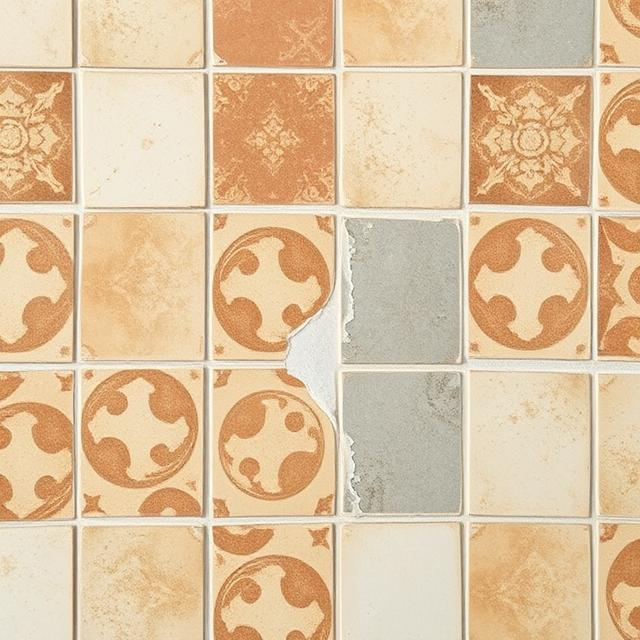
But imagine this nightmare scenario: Six months after construction, the water level starts dropping mysteriously. Tiles begin to sound hollow. A sharp edge of a broken mosaic cuts a swimmer’s foot. The water turns murky because algae is growing behind the tiles.
This is not a horror story; it is a common reality for thousands of pool owners in India. The culprit? Choosing the wrong adhesive.
Swimming pools are the most challenging environment for any tiling installation. The pressure is immense, the chemistry is harsh, and the water is relentless. You cannot use standard cement. You cannot even use standard tile adhesive.
You need a specialist. You need T3 tile adhesive for swimming pools.
At Gritolo Global India Pvt Ltd, we engineer solutions for the toughest conditions. In this comprehensive guide, we will dive deep into why IS 15477 Type 3 (T3) adhesive is the only safe choice for pools, how it works, and why Gritolo’s TA-M300 is the market leader for underwater applications.
1. The Underwater Challenge: Why Pools Destroy Ordinary Adhesives
To understand the solution, we must first respect the problem. Why is tiling a pool so different from tiling a bathroom or a living room?
A. Constant Hydrostatic Pressure
The water in a pool exerts massive weight and pressure on the walls and floor (Hydrostatic Pressure). This pressure pushes against the tiles 24/7. Ordinary cement mortar or low-grade adhesives eventually succumb to this pressure, leading to de-bonding.
B. Thermal Shock (Expansion & Contraction)
When you drain a pool for maintenance under the hot Indian sun, the surface temperature can hit 40°C+. When you fill it with cold water, it drops to 20°C.
This rapid temperature change causes the concrete shell and the tiles to expand and contract. If the adhesive between them is rigid (like cement), it snaps. The result? Cracks and popping tiles.
C. Chemical Attack
Pool water is not just water. It is a chemical cocktail of Chlorine, acid (for pH balance), and algicides. These chemicals erode standard cement bonds over time.
D. The Nature of Pool Tiles (Glass Mosaic)
Most modern pools use Glass Mosaics. Glass has zero porosity (it absorbs no water).
- Traditional Cement: Works by “mechanical interlocking” (flowing into the pores of a tile). Since glass has no pores, cement cannot stick to it. It will fall off in weeks.
- The Need: You need a chemical bond.
This hostile environment requires an adhesive that is waterproof, flexible, and chemically strong. That is exactly what T3 tile adhesive for swimming pools is designed to be.
2. Decoding the Standard: What is “T3”?
In the construction world, we follow the Indian Standard IS 15477:2019. This standard classifies adhesives into four types based on performance.
- T1: For porous tiles on floors. (Basic).
- T2: For non-porous tiles (vitrified) on walls/floors. (Standard).
- T3: For external facades, glass mosaics, and extreme conditions like swimming pools. (Premium).
- T4: For difficult substrates like drywall or metal. (Specialist).
The T3 Definition
A T3 Adhesive (like Gritolo’s TA-M300) is a “High Polymer Modified” adhesive. It contains a very high percentage of specialized polymers (resins) mixed with cement and graded sand.
Key Technical Requirements for T3:
- Shear Adhesion Strength: > 1.5 N/mm². (It holds immense weight).
- Deformability (Flexibility): It acts like a shock absorber between the tile and the concrete.
- Slip Resistance: It holds heavy tiles vertically without them sliding down.
When you specify T3 tile adhesive for swimming pools, you are asking for the heavy artillery of the adhesive world.
3. Top 7 Reasons Why T3 is Non-Negotiable for Pools
If your contractor suggests using a cheaper T1 or T2 adhesive to save money, show them this list. Here is why T3 is the only option.
R1: Adhesion to Non-Porous Surfaces (Glass Mosaics)
As mentioned, glass mosaics are popular but slippery. They have no “teeth” for cement to grab onto. T3 adhesive contains polymers that create a molecular chemical bond with the glass. It sticks to glass as effectively as it sticks to concrete.
R2: High Flexibility (S2 Grade)
The sheer volume of water in a pool makes the concrete structure move, settle, and vibrate slightly. T3 adhesive is deformable. It flexes. When the pool structure moves, the adhesive stretches instead of breaking. This prevents the dreaded “hollow sound” behind tiles.
R3: Waterproofing Support
While tile adhesive is not a replacement for a waterproofing membrane, T3 adhesive is inherently water-resistant. It does not degrade or turn to mush when submerged for 10 years. It acts as a secondary barrier of protection for your concrete shell.
R4: Resistance to Chemicals
Gritolo’s T3 formulation is engineered to withstand chlorinated water and standard pool cleaning agents. It won’t leach out into the water or weaken due to pH fluctuations.
R5: Vertical Slip Resistance
Tiling the vertical walls of a deep end (6ft+ depth) is difficult. Heavy tiles tend to slide down before the glue dries. T3 adhesive has “Non-Slip” properties. You stick the tile, and it stays exactly where you put it.
R6: Open Time
Tiling a pool is detailed work, especially with intricate mosaic patterns. T3 adhesive offers extended “Open Time” (20-30 minutes). This gives the mason enough time to adjust the sheets of mosaic to ensure the lines are perfectly straight before the adhesive dries.
R7: Peace of Mind
Repairing a pool is exorbitantly expensive. You have to drain millions of liters of water, remove the debris, re-tile, and refill. The cost of using T3 initially is a fraction of the cost of a repair. It is cheap insurance.
4. Introducing Gritolo TA – M300 [T3]
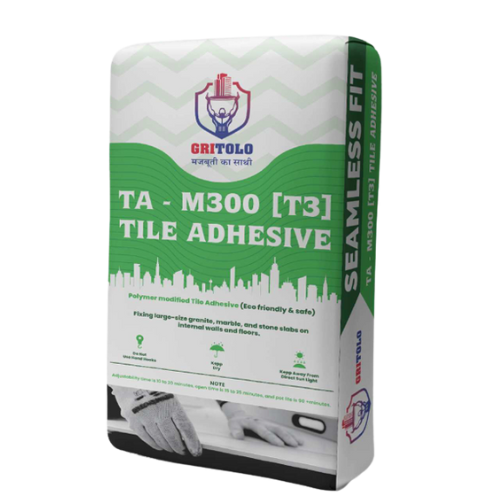
At Gritolo, we don’t just follow standards; we aim to exceed them. Our answer to the pool tiling challenge is the TA – M300 [T3] Tile Adhesive.
Product Profile:
- Base: Cementitious powder with high-grade synthetic resins.
- Classification: IS 15477:2019 Type 3 (T3).
- Application: Interior & Exterior, Vertical & Horizontal.
- Ideal For: Swimming pools, water tanks, fountains, glass mosaics, and large format vitrified tiles.
Why TA – M300 is the Smart Choice:
We have balanced the polymer ratio to ensure maximum “grab” on glass surfaces while maintaining ease of application. It spreads like butter but grips like steel.
5. T3 vs. The Rest: A Quick Comparison
Why not use T1 or T2?
| Feature | T1 (Standard) | T2 (Premium) | T3 (Gritolo M300) |
|---|---|---|---|
| Best For | Ceramics/Clay | Vitrified Tiles | Pools / Glass Mosaics |
| Polymer Content | Low | Medium | Very High |
| Water Resistance | Low | Moderate | Excellent |
| Flexibility | Rigid | Semi-Rigid | Flexible (Deformable) |
| Bond to Glass | Poor | Average | Superior |
| Pool Suitability | ❌ NO | ❌ NO | ✅ YES |
The Verdict: Using T1 or T2 in a pool is a guarantee of failure. Only T3 can handle the underwater environment.
6. Step-by-Step Guide: Tiling a Pool with Gritolo T3
Even the best T3 tile adhesive for swimming pools can fail if applied incorrectly. Here is the Gritolo-approved method statement for a leak-proof pool.
S1: Surface Preparation (The Foundation)
- Concrete Curing: Ensure the concrete pool shell has cured for at least 6 weeks (to allow shrinkage to complete).
- Waterproofing: Apply a high-quality flexible waterproofing membrane (cementitious 2-component) first. Let it cure.
- Clean: The surface must be free of dust, oil, grease, or loose particles. Clean it thoroughly.
- Test: Do a “Flood Test” of the waterproofing before tiling.
S2: Mixing the Gritolo TA-M300
- Water Ratio: Use clean, potable water (approx. 5.5 to 6 liters for a 20kg bag).
- Mixer: Always use a mechanical stirrer (drill mixer). Hand mixing is insufficient for T3 polymers.
- Slake Time: Mix for 5 minutes until creamy. Stop. Let it sit for 5 minutes. This allows the polymers to activate. Mix again for 2 minutes.
S3: Application (The Notched Trowel)
- Tool: Use a V-Notch Trowel (3mm for glass mosaic, 6mm for larger tiles). Never use a flat trowel or “blob” method.
- Spread: Spread the adhesive on the wall using the flat side, then comb through it with the notched side to create ridges.
- Back-Buttering: For Glass Mosaics, this is critical. Mosaics come on sheets (paper or mesh). The adhesive must make 100% contact.
S4: Installation
- Press: Press the tile/mosaic sheet firmly into the wet adhesive.
- Beat: Use a rubber float or mallet to beat the tiles in. This collapses the ridges and ensures 100% coverage (no air gaps behind the tile).
- Check: Periodically pull up a tile to check if the back is fully covered in grey adhesive. If you see bare tile, you need more adhesive.
S5: Grouting
- Wait at least 24 to 48 hours for the T3 adhesive to dry completely.
- Use a high-quality Epoxy Grout for pools. Cement grout will erode in chlorine. Epoxy is stain-proof and chemical-resistant.
7. Common Mistakes to Avoid in Pool Tiling
We have seen many sites fail because of simple errors. Avoid these to ensure your Gritolo T3 adhesive performs perfectly.
1. Spot Bonding (Dot & Dab):
Putting blobs of adhesive on the corners of the tile.
- Why it fails: It leaves air gaps. Water fills these gaps, pressure builds up, and the tile pops. In a pool, you need 100% full bedding coverage.
2. Adding Extra Cement:
Contractors sometimes add cheap cement to the expensive T3 bag to “stretch” the material.
- Why it fails: This destroys the chemical balance. The polymers get diluted, and the adhesive loses its flexibility and bonding power. Never add anything to Gritolo bags except water.
3. Tiling Too Soon:
Tiling on fresh concrete or wet waterproofing.
- Why it fails: Trapped moisture tries to escape and pushes the tiles off.
4. Ignoring Expansion Joints:
In large pools (Olympic size or large society pools), you must leave expansion joints every 3-5 meters. These joints should be filled with silicone sealant, not hard grout/adhesive.
8. The Cost Factor: Is T3 Worth the Price?
Let’s talk numbers.
Yes, T3 tile adhesive for swimming pools costs more per bag than Type 1 or Type 2.
- T1 (Standard): Low Cost.
- T3 (Gritolo M300): Premium Cost.
However, consider the Total Cost of Ownership:
Scenario A: The Cheap Route
You use T1 adhesive. You save ₹10,000 on material. 6 months later, tiles pop.
- Cost to drain pool: ₹15,000
- Cost to remove debris: ₹5,000
- Cost to buy new tiles: ₹20,000
- Cost of T3 Adhesive (re-buy): ₹20,000
- Labor: ₹15,000
- Total Loss: ₹75,000 + Reputation Damage.
Scenario B: The Gritolo Way
You use Gritolo TA-M300 (T3) from Day 1.
- Total Cost: The initial material price.
- Result: A pool that lasts 15+ years.
When you view it as an investment in longevity, T3 is actually the cheapest option.
Don’t Let Your Dream Pool Become a Leak
Building a swimming pool is an act of creating joy. It is a place for relaxation, exercise, and family fun. Do not let this joy be ruined by cutting corners on the most critical component—the bond that holds it all together.
The science is clear: T3 tile adhesive for swimming pools is the only standard that can withstand the pressure, chemistry, and physics of an underwater environment.
Gritolo Global India Pvt Ltd is committed to helping you build structures that last. Our TA – M300 is engineered with grit, precision, and passion to ensure your pool remains a pristine oasis for decades.
Planning a pool project? Make the right choice today.
👉 Call Gritolo Experts: +91 7397985754
👉 Find a Dealer Near You
Build Deep. Build Strong. Build with Gritolo.