The Top 5 Causes of Tile Pop-Up and How to Permanently Prevent It
It’s a sound that every contractor and homeowner dreads: the faint, hollow echo under a floor tile, a precursor to the dreaded “pop.” One day your floor is a perfect, seamless surface; the next, you have a raised, cracked, or completely loose tile. This phenomenon, known as tile “pop-up,” “popping,” or “tenting,” is more than just an aesthetic issue—it’s a sign of a fundamental failure in the tiling system.
Understanding why tiles pop up is the first step toward preventing this costly and frustrating problem. It’s rarely the tile itself that’s to blame. More often, the failure lies in the unseen layers beneath: the substrate, the installation technique, and most importantly, the adhesive that binds everything together.
A popped tile isn’t just one tile’s problem; it’s a warning that other tiles may soon follow. Whether you are a builder aiming for a zero-defect project, a contractor guaranteeing your workmanship, or a homeowner investing in a new floor, knowing the root causes is crucial.
Incorrect or Low-Quality Tile Adhesive
This is, without a doubt, the most common culprit behind tile failure. Using the wrong type of adhesive or opting for a cheap, low-grade product is a recipe for disaster.
For decades, many installers used a simple cement-sand slurry. This method is fundamentally flawed for modern tiles. Here’s why adhesive choice is paramount:
- The Problem with Traditional Cement Mortar
A simple cement-sand mix is rigid and has poor bonding strength, especially with today’s popular vitrified and porcelain tiles, which have very low water absorption rates (less than 0.5%). The non-porous back of these tiles simply cannot form a strong mechanical bond with a basic cement slurry. Over time, due to minor movements and temperature changes, this weak bond breaks. - The Non-Negotiable Solution: Polymer-Modified Adhesives
Modern, high-quality tile adhesives, like those in the GRITOLO Tile Adhesive range, are not just cement. They are sophisticated formulations containing special polymers and additives. These polymers act like microscopic flexible “hands” that create a powerful, semi-flexible bond between the tile and the substrate.- Superior Bond Strength: They are chemically engineered to adhere to low-porosity vitrified tiles.
- Flexibility: They can absorb minor vibrations and shifts in the substrate caused by thermal expansion and contraction, preventing the bond from shearing.
- Water Resistance: Adhesives designed for wet areas (like bathrooms and kitchens) contain additives that prevent water from weakening the bond over time.
Key Takeaway: Choosing a high-performance, polymer-modified tile adhesive appropriate for the specific tile (e.g., Wall vs. Floor, large format vs. standard) is the first and most critical step in preventing tile pop-up.
Improper Application and Workmanship
Even the best tile adhesive in the world will fail if it’s not applied correctly. Workmanship errors are a major contributor to debonding.
- The “Spot-Bonding” Mistake
A common shortcut is “spot-bonding” or “dabbing,” where the installer applies dollops of adhesive to the corners and center of the tile. This is extremely bad practice because:- It creates hollow voids: Large areas under the tile have no support, making them prone to cracking under impact.
- Uneven stress distribution: The tile is not uniformly bonded, creating stress points that lead to failure.
- Water ingress: The voids can trap moisture, especially in bathrooms, which can degrade the adhesive and the substrate.
- Incorrect Trowel Technique and CoverageThe correct method is to use a notched trowel to apply the adhesive to the substrate, creating uniform ridges. When the tile is pressed into these ridges, they collapse to create 85-95% coverage on the back of the tile (100% for wet areas).
- Wrong Trowel Size: A trowel with notches that are too small won’t apply enough adhesive, leading to a weak bond.
- Letting the Adhesive “Skin Over”: If the adhesive is spread over too large an area and left for too long before placing the tile, a “skin” forms on its surface, drastically reducing its ability to bond.
- The Importance of Back-Buttering
For large-format tiles (larger than 12×12 inches), it’s essential to “back-butter” the tile—applying a thin, flat layer of adhesive to the back of the tile in addition to troweling adhesive on the substrate. This ensures complete coverage and a tenacious bond.
Issues with the Substrate (The Surface Under the Tiles)
The surface you are tiling onto must be clean, stable, and properly prepared. If the foundation is weak, the entire structure built on it will fail.
- Uncured Concrete: Laying tiles on a concrete slab that hasn’t fully cured and dried is a common error. As the concrete continues to cure, it releases moisture and shrinks, creating stresses that break the tile’s bond.
- Cracks in the Substrate: Tiling over existing cracks in the concrete without treating them first is a guarantee for failure. Any movement along the crack will transfer directly to the tile, causing it to crack or pop up.
- Contamination: The substrate must be completely free of dust, oil, grease, paint, or any curing compounds. These contaminants act as a “bond breaker,” preventing the adhesive from sticking to the surface. Thorough cleaning and, if necessary, priming are essential.
- Uneven Surfaces: An uneven substrate forces the installer to use a very thick bed of adhesive to level the tiles. Most tile adhesives are designed to be used in thin layers (3-6mm). A thick bed shrinks unevenly as it cures, creating stress and weak spots.
Lack of Movement Joints (Expansion Joints)
This is a critical, yet often ignored, principle of tile installation, especially over large areas. All building materials, including tiles and the concrete slab beneath them, expand and contract with changes in temperature and humidity.
If a large floor area is tiled as one single, monolithic surface, this movement has nowhere to go. The compressive stress builds up until it reaches a breaking point, and the tiles “tent”—buckling upwards along a grout line in the shape of a tent.
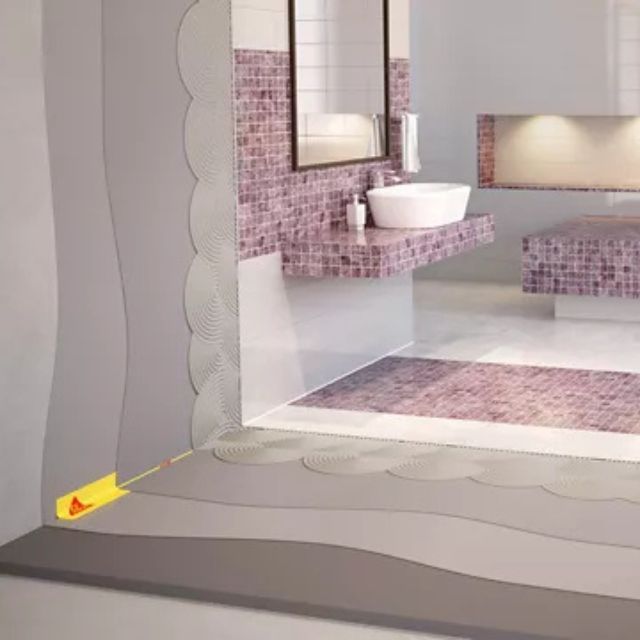
The Rule: Movement joints (also called expansion joints) must be installed. These are gaps in the tile field that go all the way through the adhesive to the substrate. They are filled with a flexible sealant (like silicone) rather than rigid grout. These joints should be placed:
- Around the perimeter of the room (where the floor meets the walls).
- Over any existing control joints in the concrete slab.
- At regular intervals (e.g., every 8-12 meters) in large tile installations.
External Factors – Moisture and Thermal Stress
Even a well-installed floor can be compromised by external factors over time.
- Water Ingress: Persistent water leakage from plumbing or from the outside can seep into the substrate. This moisture can break down even a good quality adhesive over time and cause the substrate itself to deteriorate. This is why using a high-quality, water-resistant adhesive and grout like GRITOLO Powergrout GT2 is non-negotiable in wet areas.
- Direct Sunlight: In areas exposed to direct, intense sunlight (like a sunroom or a patio adjacent to large glass doors), the floor can experience significant daily temperature swings. This causes rapid expansion and contraction, putting immense stress on the bond if a flexible, high-performance adhesive was not used.
The Ultimate Prevention Strategy: A System-Based Approach
Preventing tile pop-up isn’t about doing one thing right; it’s about doing everything right. It requires a system-based approach where every component works in harmony.
- Prepare the Substrate: Ensure it is clean, level, fully cured, and free of cracks and contaminants.
- Install Movement Joints: Plan and execute a proper movement joint layout according to industry standards.
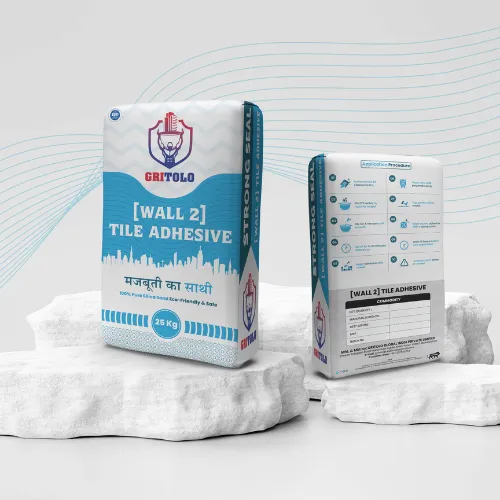
- Use the Correct, High-Quality Adhesive: This is the heart of the system. Select a polymer-modified tile adhesive that is specifically designed for your tile type and application area. For walls, use an adhesive with non-slip properties like GRITOLO Tile Adhesive (Wall). For floors, especially those with high traffic, use a robust product like GRITOLO Tile Adhesive (Floor).
- Follow Proper Application Techniques: Use a notched trowel, ensure 95-100% coverage, and back-butter large tiles. Do not take shortcuts.
- Use a Quality Grout: Finish the job with a durable, low-shrinkage grout to properly seal the joints and add to the system’s integrity.
Your First and Best Line of Defense: Choosing GRITOLO
At GRITOLO, we understand that tile adhesive is the critical foundation for any successful tiling project. Our range of tile adhesives is engineered to eliminate the primary cause of tile failure. By choosing GRITOLO, you are ensuring:
- Tenacious Bond Strength: Our advanced polymer technology creates a bond that is far superior to traditional methods, holding fast to even the most difficult-to-bond vitrified tiles.
- Built-in Flexibility: Our adhesives are designed to withstand the natural movements of a building, absorbing stress that would cause rigid mortars to fail.
- Consistency in Every Bag: Factory-produced quality means you get the same high-performance mix every time, eliminating the guesswork and inconsistency of site mixing.
Investing in a premium tile adhesive isn’t an extra cost; it’s the cheapest insurance you can buy against the massive expense and headache of a failed tile installation.
Ready to build with confidence and eliminate the risk of tile pop-up for good?